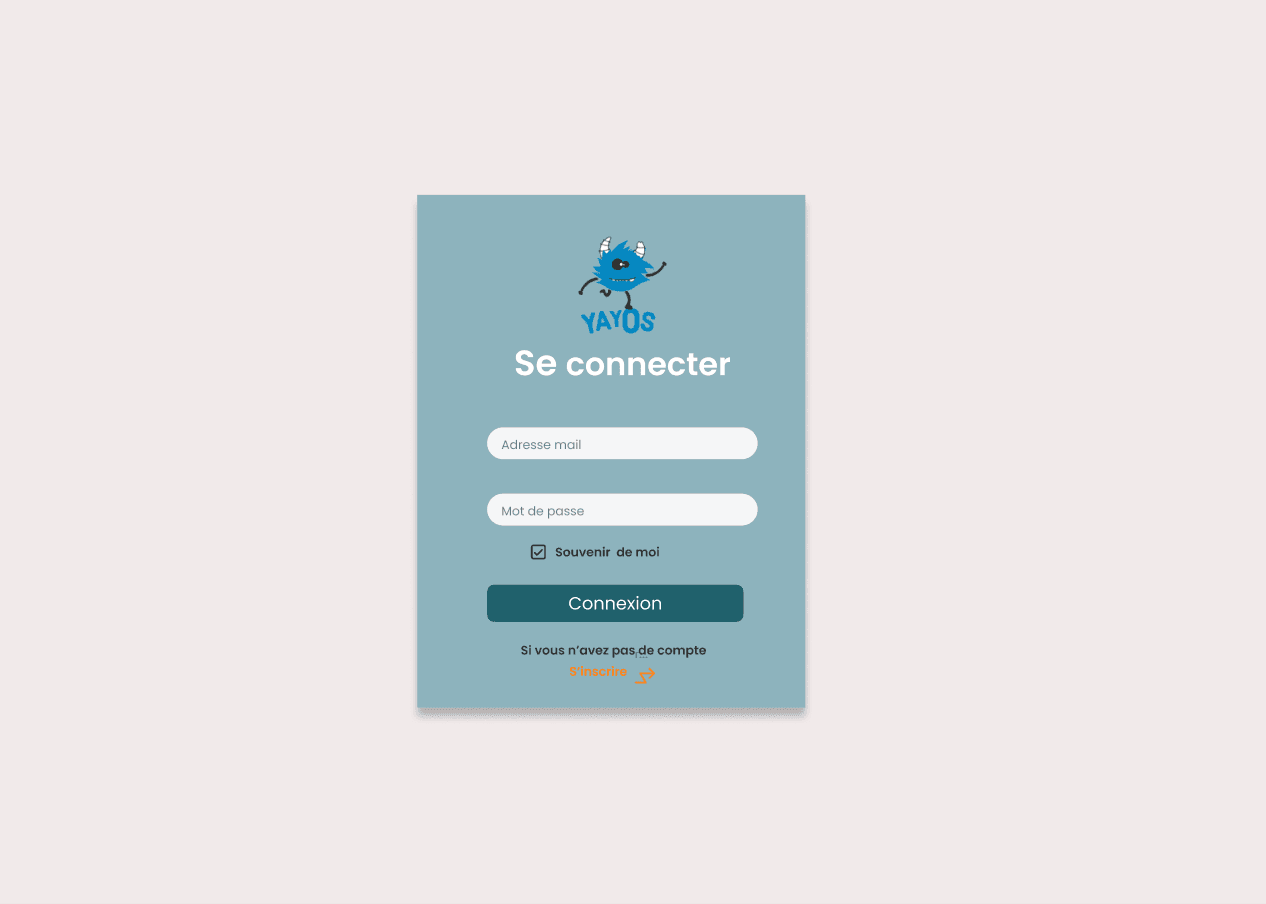
Yayos, a platform for a runners' association
Final-year project for a real client, in a team of 4, as project manager.
Completed
September 2024 → June 2025
School
Development
Technologies
01The context
A final-year project carried out for a real client, a runners' association. A team of 4, in which I was the project manager.
02A platform built to last
The website was designed to be modular. The association can create new races on its own, without calling on developers, and reuse the platform from one edition to the next.
03Three types of accounts
- Runners, who follow the race and can ask for help
- Volunteers, who respond to requests on the ground
- Administrators, who manage races, accounts and all the content
The three profiles communicate through a ticket-based messaging system, so that every request is tracked until it is resolved.
04An interactive map at the heart of the website
Developed in JavaScript, the map makes it possible to:
- draw the route of each race
- place markers with photos, so that runners can easily find their way
- report incident areas
05A display that follows the runner
The runners' interface adapts to each stage of the race.
- Before registration, to discover the route and the race information
- Just before the start, with useful information to get ready
- During the race, a mobile-first version, with real-time location and buttons to call a volunteer
- After the race, with the rankings and a space to share photos
06A race dashboard
Before developing, we designed every screen in Figma, to validate the user experience with the client. Here, for example, is the mockup of a race dashboard, the core of the platform for organizers.
At a glance, the organizer can see the number of registered runners and volunteers, the reported incidents and the tickets received, each with direct access to its management page. They can also communicate with participants by sending notifications to a specific group, such as the team in charge of removing the markers, and view the race route with the location of the markers.
07Project management
- Agile method, with regular meetings to present our progress to the client and include their feedback
- Formalizing the requirements, with a project scope document and specifications
- UML diagrams and Figma mockups, validated with the client before development
- Task distribution and tracking with Git issues
- Final presentation prepared on Canva
08Code quality
- Unit tests to make sure the features work properly
- Continuous integration (CI/CD), which runs the tests automatically on every change
- Branch organization with Gitflow
09What I take away from it
Being the project manager of a team of four, for a real client, taught me a whole job in itself. Organizing the work in sprints with Agile Scrum, distributing tasks based on everyone's strengths, tracking progress and acting as the link with the client, while developing myself, requires real rigor.
On the technical side, this project introduced me to the practices that ensure software quality in a team. Figma mockups validated before coding, UML modeling, unit tests and continuous integration saved us from many mistakes, and showed me that a team project only holds together if everyone can trust each other's code.
Personally, this is the project that revealed my taste for coordination. I learned to listen, to settle disagreements, and to keep a team motivated until delivery.
10Tech stack
Symfony, PHP, JavaScript, CSS, Figma, Git (Gitflow), CI/CD and unit testing.